Staircases are more than a way to get from one floor to another, they’re often a focal point of a home’s interior design and can be one of the first things guests see when they enter your home. Whether you’re renovating or building new, here’s a breakdown of the key elements that make up a staircase and what to know about each.
Newel Post
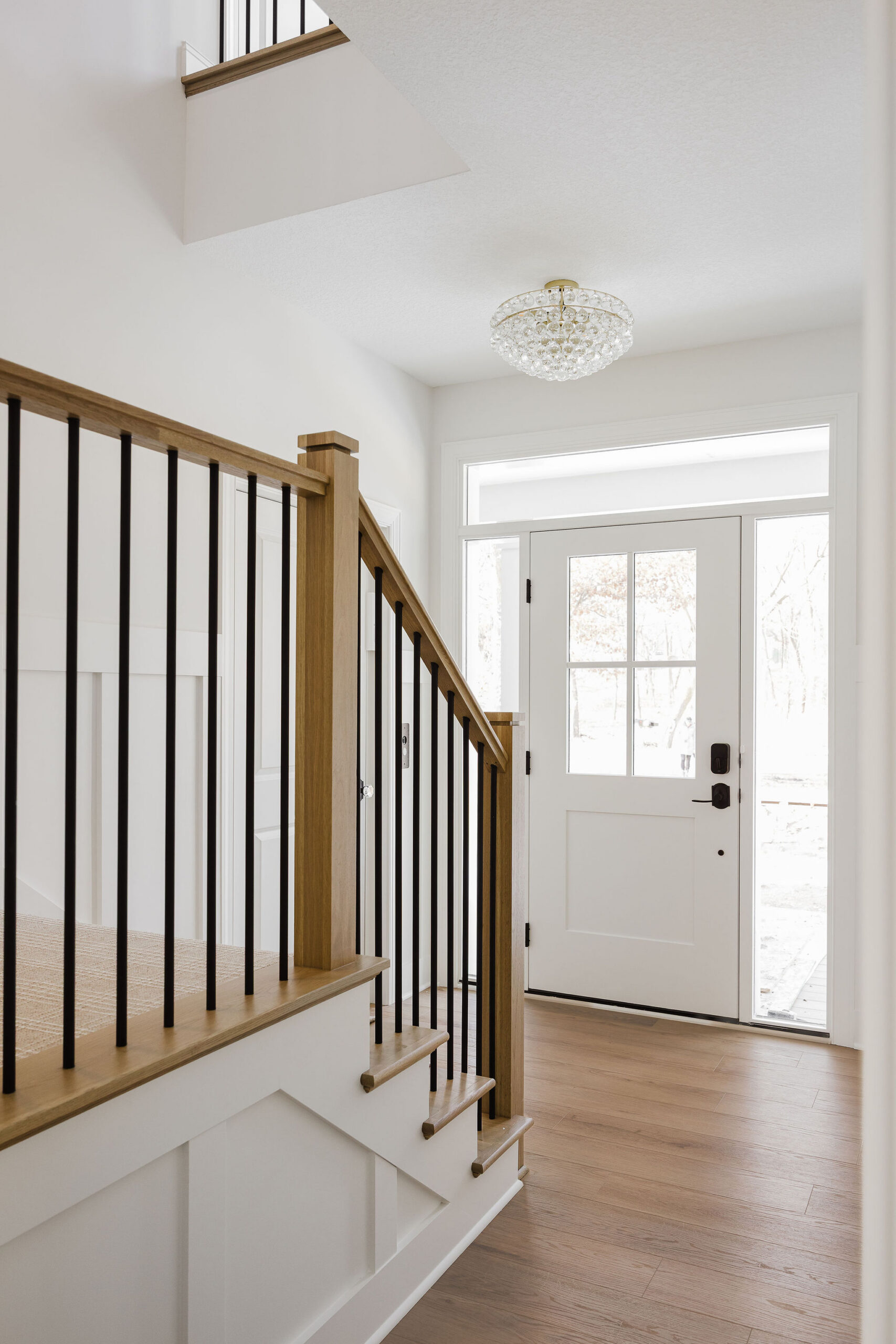
The newel post is the sturdy vertical post anchoring the handrail at the top and bottom of a staircase (and sometimes at landings or direction changes). Beyond its structural role, it’s often a design statement — box newels, turned wood posts, and iron newels are all popular styles that can set the tone for the entire staircase.
Handrail
The handrail is the piece of the banister that runs along the staircase for safety and support. Handrails come in a range of materials — wood, metal, and even glass — and their shape (round, rectangular, contoured) affects both comfort and style.
Spindles (Balusters)
Spindles, also called balusters, are the vertical (or sometimes angled) supports that run between the handrail and the treads or a bottom rail. They’re a major style element — think classic turned wood spindles or sleek iron bars.
Stair Trends and Profile
The tread is the horizontal part of the stair you actually step on, and its material and finish play a big role in both comfort and style. Common options include solid hardwood, engineered wood, stone, or carpet, each offering a different look and durability level.
In addition to considering tread finish, you’ll want to think about the tread profile you prefer. The profile refers to the shape of the tread’s front edge, which affects both appearance and underfoot feel. Popular profiles include:
- Square edge — a clean, modern line with no rounding
- Bullnose — a fully rounded front edge for a softer, traditional look
- Radius or eased edge — a subtle rounding that softens the square edge without a full curve
Stair Risers
Risers are the vertical boards between each tread (the part you step on). Here you’ll have the optionality to either contrast or match the material of the stair tread, depending on the look you’re going for. If you’re looking to add a bit more architectural interest, also consider adding a super cove, which is a decorative molding detail installed underneath the nosing, along the top of the riser.
Skirt Board
The skirt board is the finishing board that runs along the wall side of a staircase, covering the rough edges where the stairs meet the wall. It creates a clean, polished transition and can be painted or stained to match the trim throughout the home.
Landings
A landing is a flat platform along a staircase, typically found where stairs change direction or after a certain number of steps. Landings offer a resting point (and design moment if you have an open concept home with a catwalk). They are also required by code for taller staircases.
Runners
A stair runner is a strip of carpet or rug that runs down the center of the stairs, leaving some wood exposed on either side. Runners add cushioning, noise reduction, and a decorative touch if you’re hoping to infuse a bit more pattern, color, or texture to an otherwise plain staircase.
Pads
Stair pads (or stair tread pads) are individual cushioned covers placed on each tread, offering similar benefits to a runner — added grip and comfort — but installed step-by-step rather than as one continuous piece. They’re a flexible option for homeowners who want cushioning without committing to a full runner installation.
A staircase brings together structural necessity and design opportunity. Understanding these core components makes it easier to have informed conversations with contractors, designers, or builders when planning your next project.
Looking for more home-related tips, tricks, and resources? Join our email list for the latest and greatest Alma Homes updates, and follow us on Instagram for more inspiring home and design content.